Why Encryption Matters for Sensitive Business Operations | ObsidianX
A practical guide to why encryption matters for sensitive sales, stock, staff, customer, and account records in private business operations.
By ObsidianX
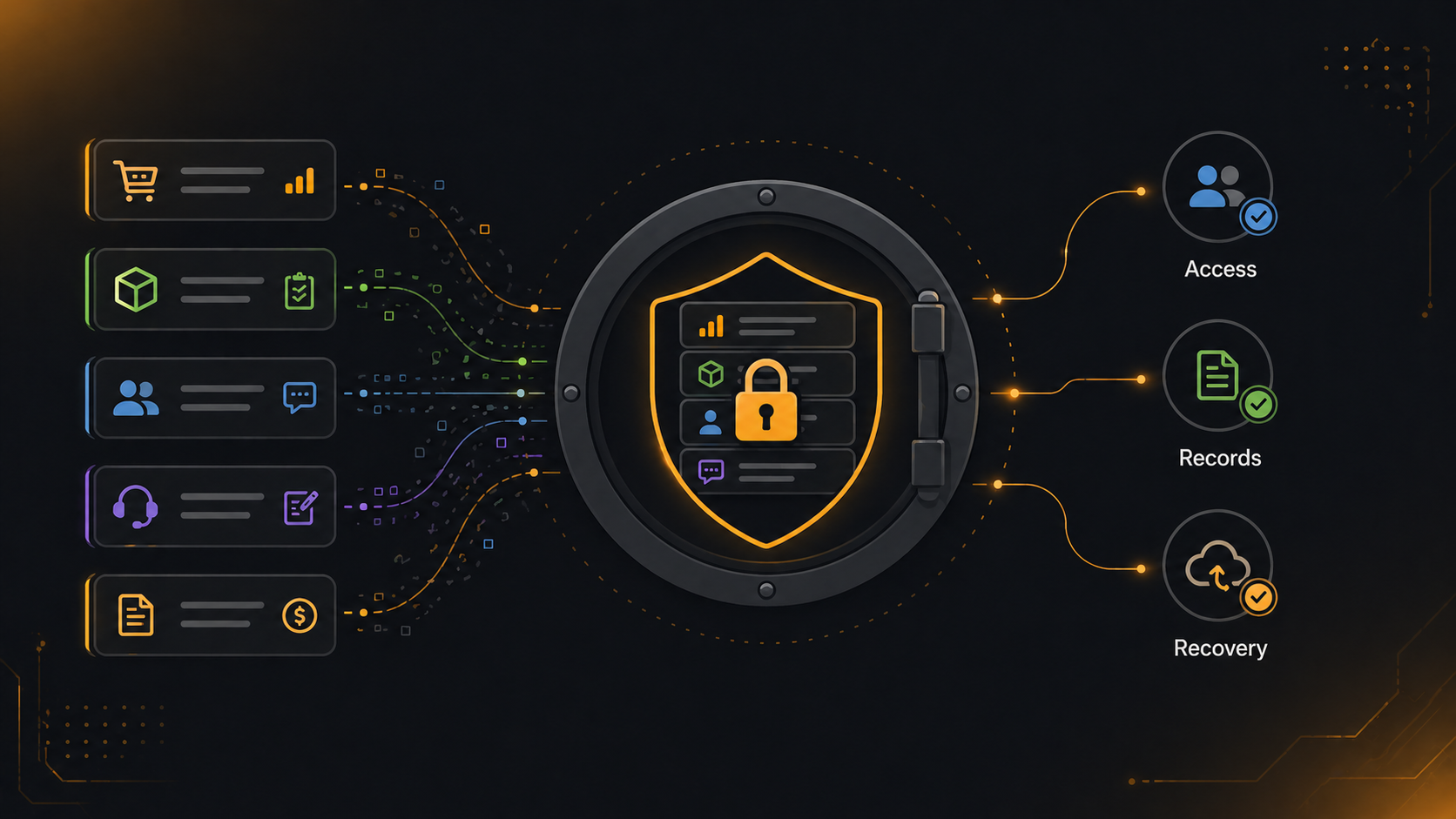
Encryption is not just for technical teams
Encryption can sound like something that belongs in a security document, far away from the normal work of running a business. But the basic idea is practical: sensitive information should not be easy to read just because it ended up in the wrong place.
If a business is managing sales, balances, stock, staff updates, support notes, or customer-sensitive information, those records deserve protection. They show how the business works day to day. They can reveal what is selling, what is missing, who is involved, where money is tied up, and which problems still need attention.
Access control and encryption are not the same thing
Access control decides who is allowed into a system. Encryption helps protect the information itself. You need both, because they solve different problems.
A login page is like the front door. Encryption is part of what protects the contents behind the door, and in some cases what protects them if they are stored, backed up, moved, or exposed somewhere they should not be.
That does not make any system magic or invincible. It does mean sensitive records are treated with more care than a plain shared file or a loose export sitting on a device.
Business records become sensitive when they connect together
One sale, one stock update, or one support note may not look especially private on its own. The sensitivity appears when those records build up and connect.
Sales history can reveal trading patterns. Balances can reveal financial pressure. Stock movement can show what is in demand, what is running low, or where a supplier problem is forming. Staff submissions can show internal habits and responsibilities. Support notes can reveal customer issues that should not be casually exposed.
Together, those records describe the working shape of the business. That is why they need more than convenience. They need control.
Shared files spread risk quietly
Many businesses start with spreadsheets, shared folders, exported reports, screenshots, and message threads. These tools are useful, especially early on. The problem is that sensitive information starts to spread without anyone really noticing.
A file gets downloaded. A report is forwarded. A screenshot stays in a chat. An old export sits in an inbox. A staff member keeps a copy because it was useful at the time.
None of that usually happens with bad intent. It happens because people are trying to get work done. But over time, the business ends up with readable copies of important records in too many places.
Encryption supports better habits
Encryption does not replace common sense. It does not remove the need for strong passwords, careful staff permissions, secure devices, and sensible internal rules.
What it does is support better habits. It helps keep important records inside a more controlled environment. It reduces the amount of sensitive information that has to move around as plain files, copied sheets, or unprotected exports.
For a busy business, that matters. Good security should not depend on everyone remembering the perfect manual process every time.
Recovery has to be part of the design
One fair concern with encryption is recovery. If information is strongly protected, what happens if access is lost?
That is why encryption should not be treated as a standalone feature. It needs to sit beside account recovery, emergency access planning, backups, administrative controls, and clear ownership of the business account.
The balance is important. Sensitive records should be difficult for the wrong person to read, but the right person should still have a controlled path back in when something goes wrong.
Encryption is one layer, not the whole answer
It is easy for software to talk about encryption as if that solves everything. It does not. A business still needs good access control, sensible roles, session handling, staff discipline, and a clear understanding of who should see what.
Encryption is one layer in a wider security model. It is an important layer, but it works best when the rest of the workflow has been designed with the same level of care.
What to ask before trusting a system
When looking at software for sensitive operations, do not stop at “does it use encryption?” Ask better questions.
What records are protected? Where are they stored? Who can access them? What happens when a staff member leaves? How does recovery work? Can different roles see different things? Are exports and shared copies really necessary, or can more work stay inside the system?
The goal is not to collect impressive technical words. The goal is to understand whether the system treats your operational records like private business assets.
Where ObsidianX fits
ObsidianX is built for businesses that need to manage sensitive operational records without spreading them across spreadsheets, chats, screenshots, and disconnected tools.
The system is designed around private access, structured records, staff workflows, account management, and support activity. Encryption is part of that picture, but it is not treated as a decorative claim. It belongs with the wider question: how should a business protect the records it depends on every day?
For example, a staff member may need to submit an update without seeing wider account data. A manager may need to review activity without giving every user the same level of access. A business owner may need confidence that sales, stock, balances, notes, and support records are not being handled like ordinary shared documents.
ObsidianX is intended to bring those records into one more controlled workspace. Instead of relying on scattered files and informal updates, the business can work from a private system where access, review, and account-level control are part of the workflow.
Why that matters in daily work
Security only helps if people can still get their work done. A system that is too awkward will push staff back into messages and spreadsheets. A system that is too open creates unnecessary exposure.
The aim with ObsidianX is to sit between those extremes: private enough for sensitive records, structured enough for managers to see what is happening, and practical enough for daily use.
Encryption helps protect the record, but the larger value is operational control. The business can keep important information closer to the workflow, reduce avoidable copies, and make sensitive activity easier to manage without turning every small task into a security project.