Safer Staff Submissions with Approval Workflows | ObsidianX
Learn how approval workflows make staff submissions easier to review, correct, and control before they affect sensitive business records.
By ObsidianX
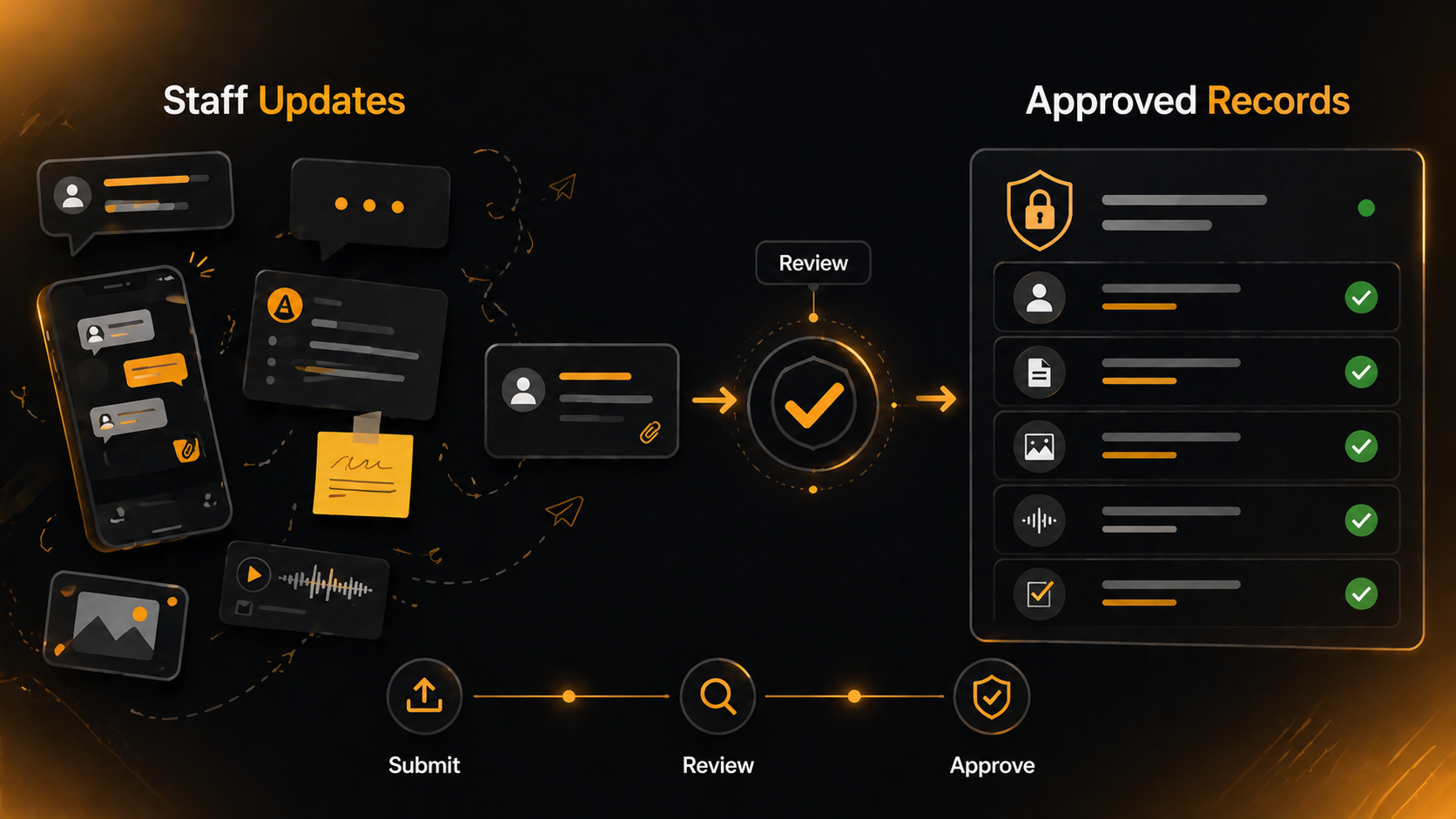
Informal updates work until the business gets busier
Most teams do not start with a formal submission workflow. They start with whatever is fastest: a message, a screenshot, a quick note, or a call. That is normal. When there are only a few updates a day, informal communication can feel efficient.
The problem appears when the volume increases. More staff members send more updates, and those updates start affecting sales records, stock movement, balances, customer notes, or support commitments. At that point, speed alone is not enough. The business needs a way to review what is being submitted before it becomes part of the main record.
Chats are useful, but they are not a record system
Messaging tools are good for conversation. They are less reliable as the place where important operational records are created and approved.
In a chat thread, it can be hard to see which updates have been checked, which ones still need attention, and which ones were corrected later. A detail can be buried under newer messages. A screenshot can be unclear. A manager may approve something in one place, then need to update the actual business record somewhere else.
That gap between the conversation and the record is where mistakes often happen.
An approval workflow creates a useful pause
A good approval workflow does not slow the business down for the sake of process. It creates a short, useful pause between “someone submitted this” and “this changed the official record.”
That pause gives an operator or manager time to check the submission, correct obvious problems, reject unclear entries, or approve clean ones. The staff member can still send the update quickly, but the system does not have to treat every submission as final the moment it arrives.
Staff can submit without seeing everything
One of the biggest advantages of a dedicated workflow is separation. Staff may need to submit sales, stock updates, customer notes, or issue reports, but they do not always need full access to every sensitive business record.
A controlled submission flow can give staff the surface they need for their role while keeping broader account data, private notes, balances, and management views limited to the people who actually need them.
That is safer than putting everyone inside the same spreadsheet, shared account, or message chain and relying on habits to keep boundaries clear.
Corrections become easier to handle
Not every submission will be perfect. A quantity may be wrong. A note may be missing context. A customer detail may need checking. In an informal workflow, corrections often happen across several places: one message to clarify, another to approve, and a manual change somewhere else.
Approval workflows make corrections easier because the submitted item has a place to sit while it is being reviewed. The decision and the record stay closer together. That makes it easier to understand what happened and why.
Managers get a cleaner view of what needs attention
Without an approval queue, managers often have to scan messages, ask follow-up questions, and remember which updates still need action. That creates unnecessary pressure, especially when the day is already busy.
A clear approval view gives managers a more useful list: what is pending, what has been accepted, what needs correction, and what should not be added to the record. It turns scattered updates into work that can be reviewed in order.
Approval is not about mistrust
Some teams worry that approval workflows feel heavy or suspicious. They do not have to. In many businesses, approval is simply a way to protect the record and support the staff member at the same time.
Staff can send updates without needing to understand every downstream effect. Managers can review sensitive changes before they affect reports, balances, or customer records. Everyone gets a clearer process.
Where ObsidianX fits
ObsidianX is built around the idea that sensitive operational records should not depend on scattered messages and manual cleanup. Staff workflows, secure access, account management, and reviewable operational records belong in one private workspace.
For businesses that already rely on staff submissions, an approval workflow can make daily operations easier to follow, easier to correct, and safer to control.